

ROMSİD Project Launch Event for the Establishment of an Effective Monitoring, Evaluation, and Coordination Mechanism for the Roma Strategy Document Held in Ankara on July 13
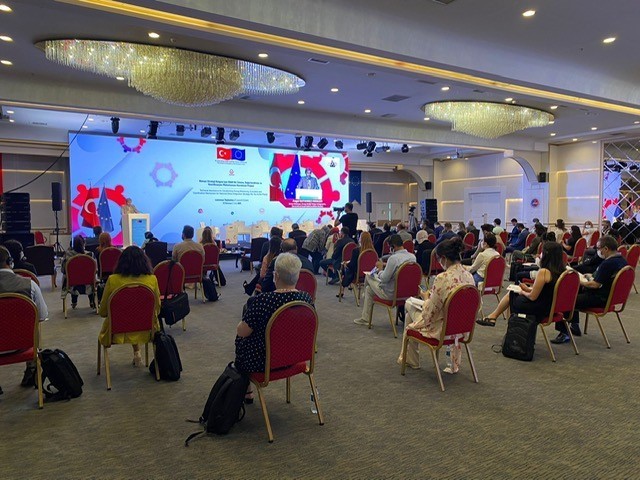
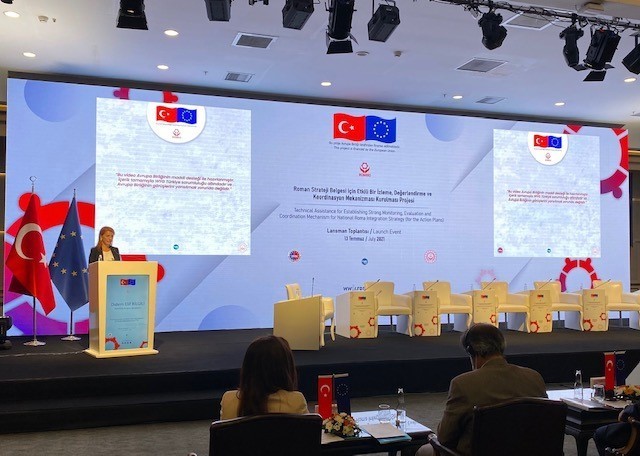
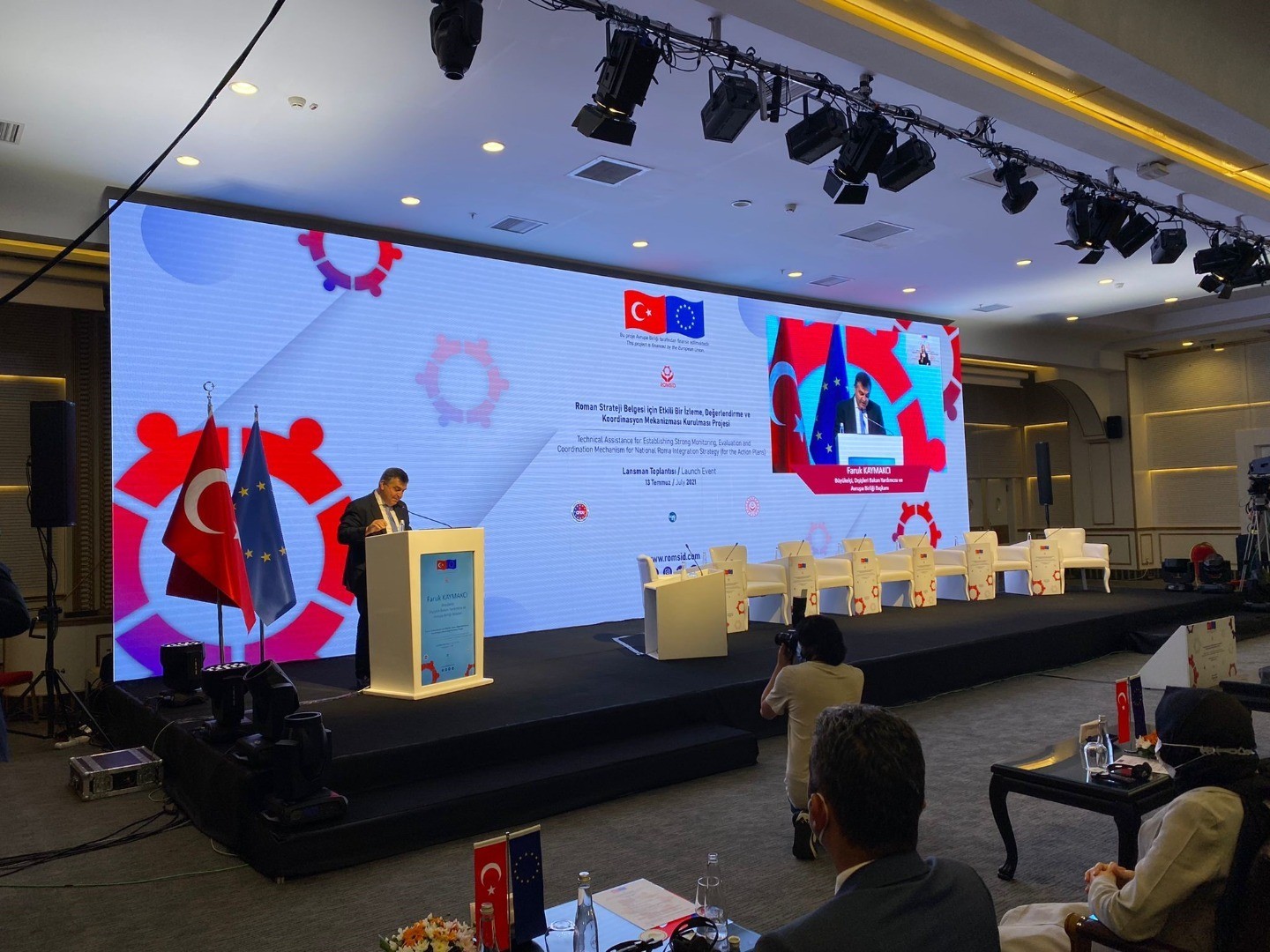
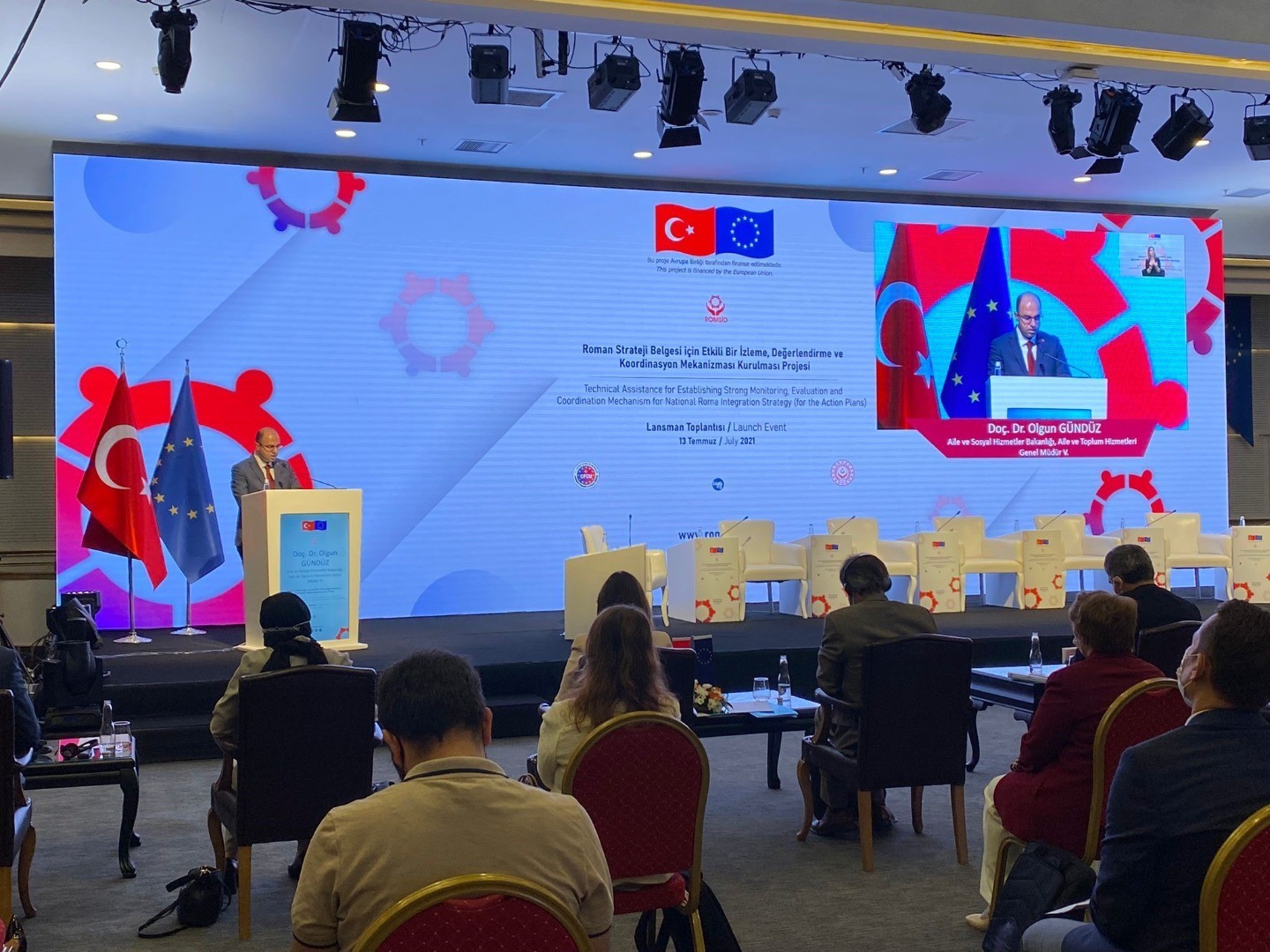
The launch event of the “Establishment of an Effective Monitoring, Evaluation, and Coordination Mechanism for the Roma Strategy Document (ROMSİD)” Project, implemented by the Ministry of Family and Social Services and financed by the European Union, was held in Ankara on July 13, 2021.
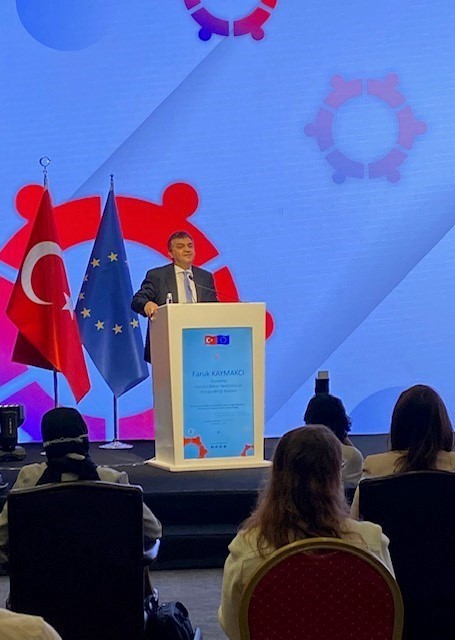
The hybrid event, which participants also attended online, began with opening speeches delivered by Deputy Minister of Foreign Affairs and President of the Directorate for EU Affairs Ambassador Faruk Kaymakcı, President of the Central Finance and Contracts Unit Dr. Hakan Ertürk, Head of the Economic and Social Development Section at the EU Delegation to Turkey First Counsellor Angel Gutierrez-Hidalgo, and Acting Director General of Family and Community Services at the Ministry of Family and Social Services Assoc. Prof. Dr. Olgun Gündüz.
The information session started with a presentation introducing the ROMSİD Project, which aims to improve the living standards of Roma citizens in Türkiye and ensure their effective access to all public services. The session continued with a talk by 27th Term MP Cemal Bekle on “The Representation of Roma Citizens in Politics” and a presentation by EU Delegation to Turkey Programme Manager & Roma Focal Point Mehmet Caner Demir on “Evaluation of Türkiye’s Efforts for Roma Citizens within the EU Accession Process.”
During the break, renowned clarinet virtuoso Serkan Çağrı and his orchestra delivered an enjoyable live performance for both in-person and online participants.
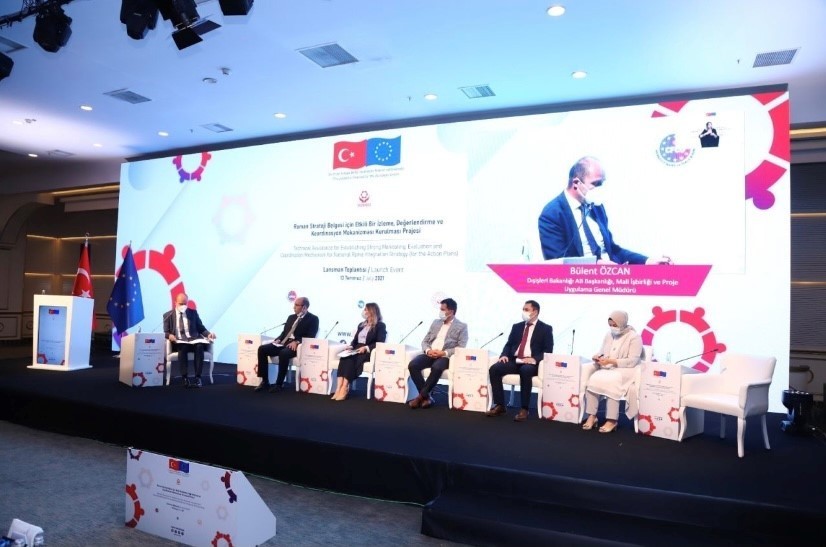
In the afternoon session, a panel on “The Importance of Monitoring and Evaluation in Designing Public Policies to Support Social Inclusion” was held with senior representatives of the project’s partner institutions, who shared insights on their responsibilities and ongoing efforts within the scope of the Roma Strategy Document.
The event concluded with the panel “The Role of Civil Society and Academia in Implementing the Roma Strategy Document,” where representatives from civil society and academia discussed service areas, collaboration efforts, and solution-oriented approaches to challenges faced by Roma citizens.